
Whether of plant or synthetic origin, antioxidants play a central role in maintaining cellular health. Their ability to counteract the harmful effects of oxidative stress makes them valuable allies in both animal and human nutrition.
Oxidative stress: A silent threat
Oxidative stress results from an imbalance between the production of free radicals and the body’s antioxidant defenses. These free radicals, naturally produced by metabolism or generated by external factors (stress, heat, pollution, inflammation, etc.), attack cells, proteins, and DNA.
This process accelerates cellular aging and weakens the organism. This phenomenon affects both humans and animals. In livestock, it can impair zootechnical performance and animal welfare. In humans, it is involved in many chronic diseases.
What are the types of antioxidants?
Natural antioxidants
- Vitamins:
- Vitamin E (tocopherols – found in certain vegetable oils and seeds): protects lipid cell membranes.
- Vitamin C (ascorbic acid – extracted from certain fruits and vegetables): a water-soluble antioxidant that regenerates other antioxidants.
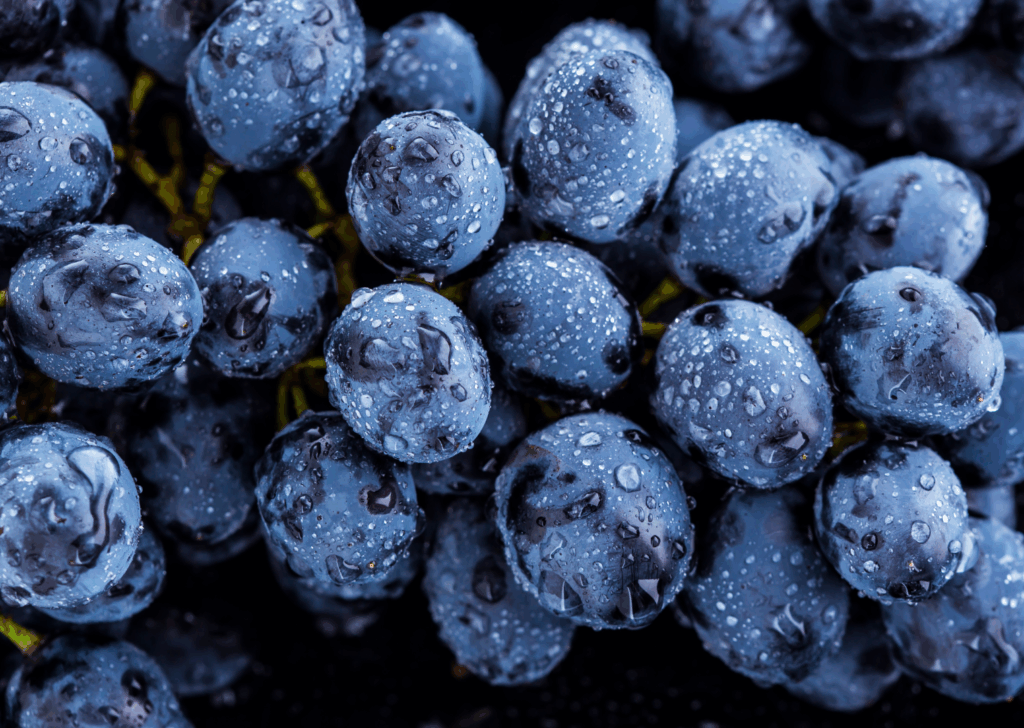
- Polyphenols: Extracts from grape, rosemary, green tea, turmeric, olive etc., rich in flavonoids, phenolic acids, or tannins.
- Carotenoids: Astaxanthin, beta-carotene, lycopene, lutein pigments with strong antioxidant effects.
- Organic Selenium: A cofactor for enzymes that defend against peroxides.
Synthetic antioxidants
- Synthetic Vitamin E and C: The most widely used in animal feed due to their efficiency and lower cost.
- BHA, BHT, ethoxyquin: Effective but increasingly replaced by natural alternatives because of health and regulatory concerns.
How do antioxidants work?
A vital defense against free radicals
Antioxidants are compounds that neutralize free radicals, unstable molecules naturally produced by the body or induced by external factors (pollutants, infections, heat stress, UV, etc.).
What are free radicals?
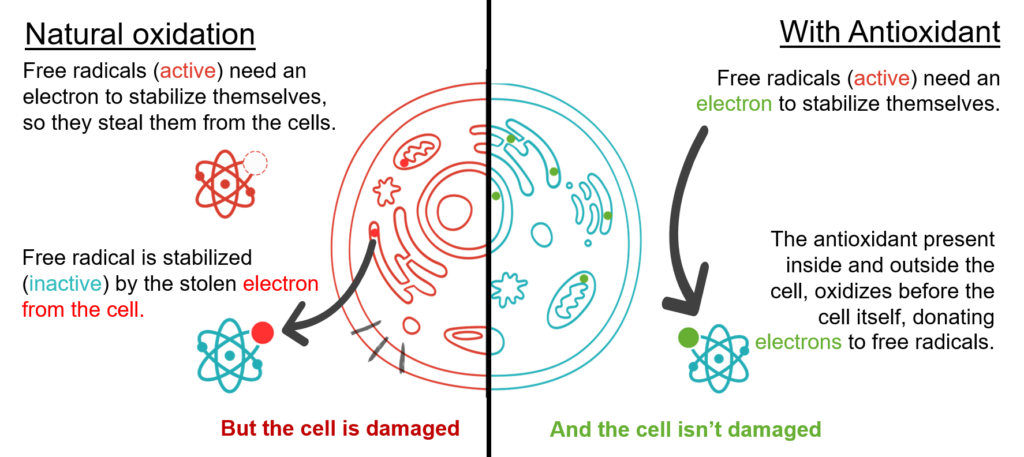
Free radicals are reactive oxygen species (ROS): molecules or atoms with an unpaired electron in their outer shell, making them highly unstable and reactive. To regain stability, they “steal” an electron from other molecules (lipids, proteins, DNA), triggering oxidative chain reactions.
These chain attacks can:
- Damage cell membranes (lipid peroxidation),
- Alter DNA and proteins,
- Disrupt cellular function,
- Trigger inflammatory processes.
This imbalance between free radicals and antioxidant defenses is what we call oxidative stress.
The role of antioxidants: Stopping chain reactions
Antioxidants break this destructive cycle by neutralizing free radicals before they damage cellular structures. They act through several complementary mechanisms:
- Electron or hydrogen atom donation:
Antioxidants such as vitamin E or vitamin C donate an electron to free radicals without becoming unstable themselves, halting the chain reaction.
- Chelation of pro-oxidant metals:
Certain antioxidants (e.g., polyphenols) can bind transition metals such as iron or copper, which catalyze free radical formation via the Fenton reaction.
- Activation of endogenous antioxidant enzymes:
Micronutrients like selenium or zinc act as cofactors for natural enzymatic systems (glutathione peroxidase, superoxide dismutase, catalase), thus strengthening the body’s internal defenses.
- Cross-regeneration between antioxidants:
Some antioxidants work synergistically, for example, vitamin C regenerates vitamin E after it neutralizes a free radical, optimizing overall efficiency.
Balance and synergy: The key to effective protection
No antioxidant works alone or universally. Their effectiveness depends on:
- Solubility (fat-soluble vs. water-soluble),
- Localization in the body (membranes, plasma, cytoplasm, etc.),
- Stability within the food matrix,
- Their ability to act synergistically.
That is why, at Phodé, we pay close attention to the combination and complementarity of active compounds in our formulations, enhancing their efficacy while managing their sensory impact.
In animal nutrition: Protect health, optimize performance, ensure feed quality
In livestock production, antioxidants can be used to protect animal health, particularly during periods of transition or stress, and to preserve the nutritional quality of feed.
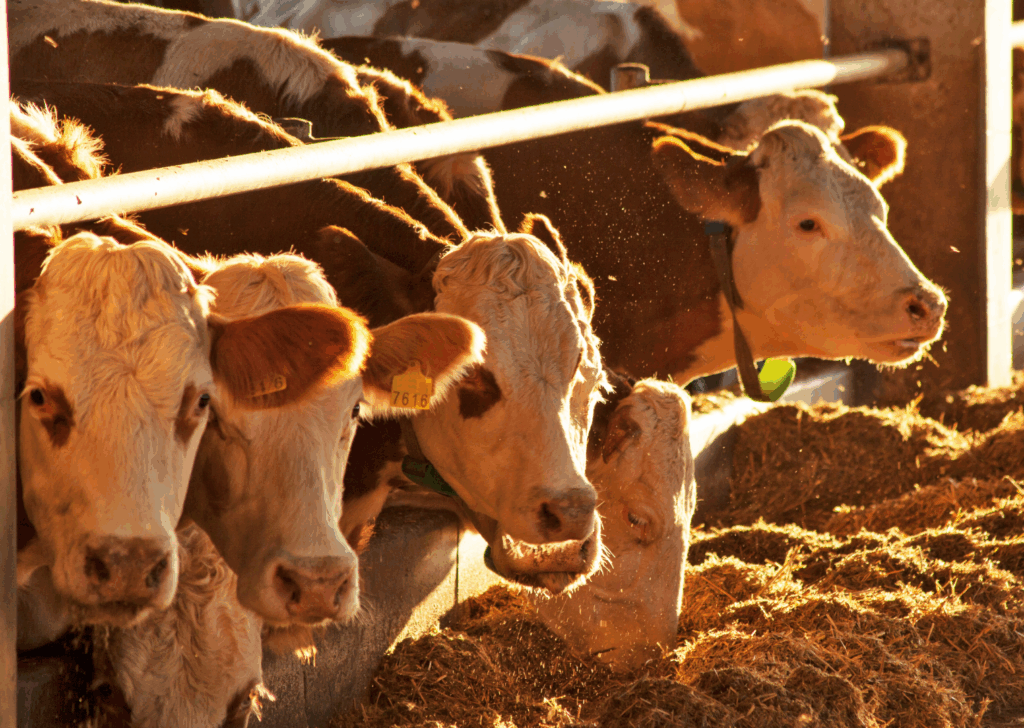
For animals, they help to:
- Strengthen immune defenses,
- Preserve cellular integrity and reproductive functions,
- Improve resistance to heat or transport stress,
- Support growth and zootechnical performance,
- Enhance muscle quality and therefore meat and fish fillet quality.
In feed, antioxidants help to:
- Protect pigments (natural or synthetic) added for better coloration of fish or poultry fillets,
- Maintain feed palatability (e.g., preventing rancidity of vegetable oils used in feed),
- Limit the degradation of raw materials to preserve nutritional value (e.g., preventing the breakdown of vitamins or amino acids).
In human nutrition: A natural response to daily challenges
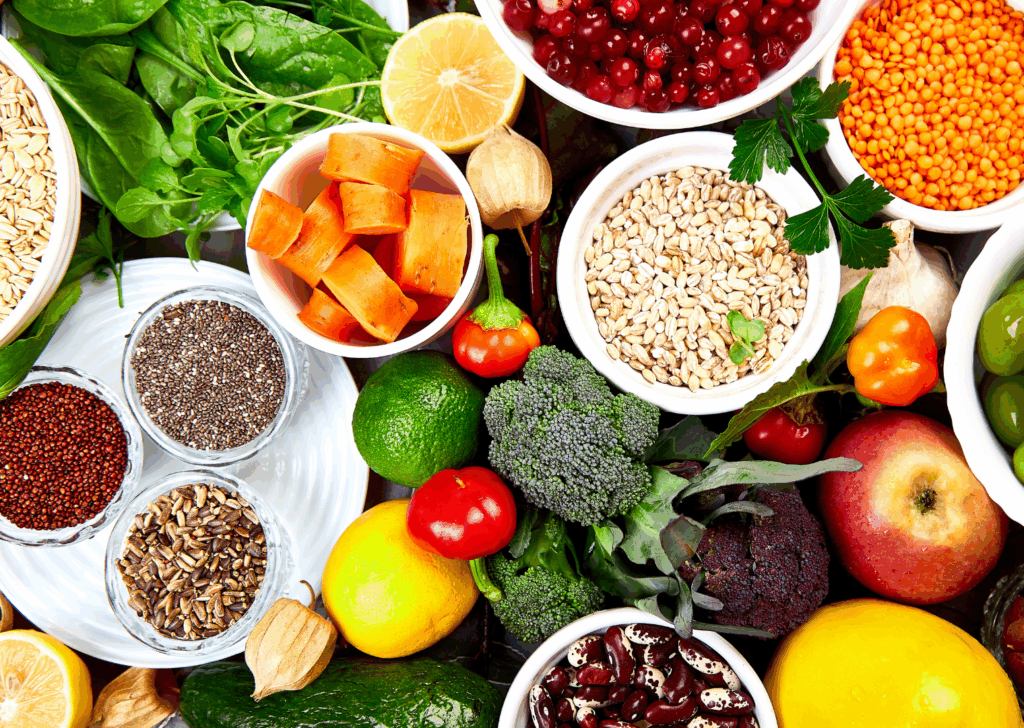
Antioxidants are now widely recognized for their benefits to human health. Whether from plants, fruits, spices, or microorganisms, they are valued for their ability to:
- Protect cells against premature aging,
- Help prevent cardiovascular and neurodegenerative diseases,
- Strengthen immune defenses,
- Improve physical and mental recovery.
Phodé focuses on combining efficacy, stability, and sensory pleasure, with special attention to natural sourcing, traceability, and compound synergy.
Challenges to overcome
Incorporating antioxidants, particularly plant-based ones, raises several often underestimated challenges:
- Some extracts are bitter, astringent, pungent, or herbal, especially polyphenol-rich sources (rosemary, grape, green tea), which can affect palatability or consumer experience.
- Some active compounds are unstable under heat, light, or pH variations, reducing their effectiveness.
- The choice of antioxidant depends on precise analytical characteristics and requires impeccable sourcing quality.
Phodé leverages its expertise to balance naturalness, acceptability, and efficacy through:
- Specific masking solutions adapted to animal species or human formulations,
- Galenic forms designed to protect and optimize antioxidant actives,
- Synergistic combinations of compounds to reduce dosage while maintaining performance.
Natural antioxidant compounds are excellent candidates for both animal supplementation and human dietary supplements.
At Phodé, our long-standing experience with plant-based actives enables us to select powerful natural antioxidant alternatives. Combined with our sensory and formulation expertise, we offer solutions for animal nutrition as well as taste-masking expertise for nutraceutical applications in human health.